Loft conversion plans are the drawings and calculations that show exactly what will be built and prove it meets planning rules and Building Regulations. You need them before any building work starts. They come in three sets: planning drawings for the council, Building Regulations drawings for building control, and structural calculations from an engineer.
This guide explains what goes into each set, who can draw them, whether you need an architect, and what to check before you sign anything off.
What do loft conversion plans include?
| Set of plans | What it shows | Who it’s for |
|---|---|---|
| Planning drawings | How the house will look from outside, before and after: elevations, roof plan and floor plans | The council, for planning permission or a Lawful Development Certificate |
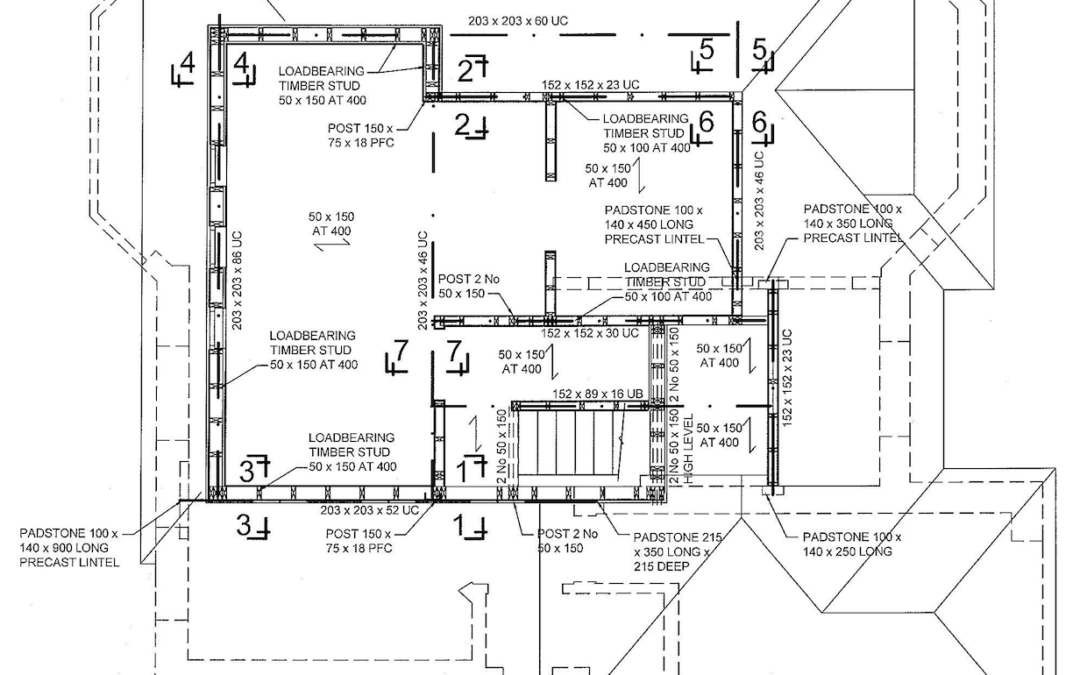
| Building Regulations drawings | How the loft will be built: structure, insulation, fire escape route, stairs, ventilation and materials | Building control, who check and inspect the work |
| Structural calculations | The size and position of steel beams, new floor joists and how loads are carried down to the walls | Building control and your builder |
Planning drawings
These show the outside of the house and its effect on the street and neighbours. Even if your loft is Permitted Development, you’ll use these drawings to apply for a Lawful Development Certificate, which proves the work was allowed. Read our planning permission guide.
Building Regulations drawings
These are far more detailed. They show your builder exactly how to build the loft and show building control that it will be safe, warm and properly protected from fire. Every loft conversion needs Building Regulations approval, even when no planning application is needed.
Structural calculations
A structural engineer works out which steel beams and joists are needed, their sizes and how they sit on the existing walls. In terraced and semi-detached houses, beams often rest on the party wall, which is why your neighbours usually need a party wall notice. See our party wall guide.
Who draws loft conversion plans?
You have two main routes:
| Route | How it works | Good for |
|---|---|---|
| Design-and-build loft company | One company handles the survey, drawings, engineer, approvals and the build | One point of contact, one price, and a design you know the builder can build |
| Independent architect or architectural designer | You appoint them for the drawings, then find a builder separately | Complex or unusual designs, listed buildings, or if you want to tender the build |
With a design-and-build company, the people drawing your loft are the people building it, so there’s no gap between what’s drawn and what’s possible on site. With an independent architect, you get a separate professional on your side, but you’ll need to coordinate the architect, engineer and builder yourself.
Do I need an architect for a loft conversion?
Not legally. Many loft conversion plans are drawn by architectural designers or technologists rather than registered architects, and that’s fine for most lofts. What matters is that whoever draws them specialises in lofts. A loft designer knows how to find extra headroom, place the staircase and fit an en-suite into a sloping roof, which a general designer may not.
An architect is worth considering for a listed building, a sensitive conservation area or an unusual design.
How to choose who draws your plans
- Check their loft experience. Ask to see plans and photos of finished lofts in houses like yours.
- Check registration. Only people registered with the Architects Registration Board (ARB) can call themselves architects. Membership of RIBA is a further mark of standards.
- Ask what’s included. Structural calculations, Building Regulations drawings, applications and amendments are not always in the price.
- Check they’ll deal with the council for you, including any changes the planners ask for.
How do you get loft conversion plans approved?
- Survey. The designer measures the house and loft, checks the head height and roof structure, and discusses how you want to use the space.
- Design. You agree a layout: stairs, rooms, windows, en-suite and storage. Expect a round or two of changes.
- Planning drawings and application. These go to the council, either for a Lawful Development Certificate or for full planning permission. Both usually take around eight weeks for a decision.
- Structural calculations. The engineer sizes the steels and joists.
- Building Regulations drawings. These are submitted to building control, either the council or a registered private building control approver.
- Party wall notices. If you share a wall, notices go to your neighbours at least two months before work on the wall starts.
- Build. Building control inspects the work at key stages and issues a completion certificate at the end.
Many of these steps run side by side, so the paperwork usually overlaps rather than adding up one after another. Your designer or builder should give you a timeline at the start.
How much do loft conversion plans cost?
It depends on who draws them and what’s included. Independent architects often charge a percentage of the total build cost, so the fee can rise if the project grows. Many loft specialists offer a fixed fee instead, or include the drawings in a design-and-build price, so you know the cost from the start.
On top of the drawings, budget for:
- Structural engineer’s calculations, if not included
- Council fees: £548 for a householder planning application or £274 for a Lawful Development Certificate in England
- Building control fees, which vary by council or approver
- Party wall surveyor’s fees, if your neighbours appoint one
Always ask for a written breakdown of what the fee covers before you commit. See our loft conversion cost guide for build prices.
What to check in your loft conversion plans
Before you approve the drawings, check these, because they’re much harder to change once building starts:
- Head height where you’ll actually stand, walk and sleep, not just at the highest point
- Staircase position and how much space it takes from the floor below
- Window positions and how much daylight each room will get
- Bathroom layout, including where the toilet and shower sit under the slope
- Sockets, lights and radiators, marked where you’ll use them
- Storage in the eaves
- How it looks from outside, especially from the street and next door
For more on getting the design right, read our guides to loft conversion mistakes and mansard vs dormer loft conversions.
Want to see what’s possible in your loft? We survey, draw and build, with one point of contact throughout.
Loft conversion plans: frequently asked questions
Do I need plans for a loft conversion?
Yes. Even if your loft doesn’t need planning permission, you need Building Regulations drawings and structural calculations, and building control must approve the work.
Do I need an architect to draw loft conversion plans?
No. Plans can be drawn by an architect, an architectural designer or a design-and-build loft company. Choose someone with plenty of loft experience.
What drawings do I need for a loft conversion?
Usually three sets: planning drawings (for planning permission or a Lawful Development Certificate), Building Regulations drawings, and structural calculations from an engineer.
How long do loft conversion plans take?
Allow time for the survey and design, then around eight weeks for a planning decision or Lawful Development Certificate. Building Regulations drawings and party wall notices can usually run alongside.
Can I use the plans to get quotes from different builders?
Yes, if you’ve paid an independent designer for the full set. Make sure the Building Regulations drawings and structural calculations are included, so every builder prices the same job.
Can I change my plans after they’re approved?
Small internal changes are usually fine. Changes to the outside may need a new or amended planning application, and structural changes need building control’s approval. Talk to your designer before changing anything.
Get your loft conversion plans drawn by specialists
Good loft conversion plans make everything that follows easier: a smoother planning decision, an accurate price and a build with fewer surprises. We survey your loft, draw the plans, handle the applications and build it, with one fixed price and no obligation to start.